

Fred Stein: City. Life. Portrait
30.04.26 - 14.06.26 Leica Galerie Wetzlar-
“The Leica taught me photography.” These were the words Fred Stein (1909–1967) used to summarise his experiences and entry into photography. Trained as a lawyer, Stein put his passion for the medium to good use after being forced to emigrate from Germany: in Paris, and later in New York, the amateur photographer quickly became an outstanding representative of street photography, who also excelled in portraiture.
After studying law, Stein worked as a legal clerk in Dresden. However, once the National Socialist party came into power in 1933, he was forced to leave Germany for antisemitic and political reasons. Under the pretext of their honeymoon, the Steins managed to flee to Paris via Prague. In their luggage they carried the Leica I, which they had purchased jointly, and which was to become their main source of income; the camera would offer Stein a new life perspective and existence. He looked at life on the streets of Paris with great attention and curiosity. His interest lay in the small, seemingly insignificant, but all the more meaningful, moments of daily life. “When I pass a man in the street, I look for his story,” he used to say. His humanistic focus, as well as his unvarnished honesty, formed the basis for a rapidly growing archive of photographs on individual topics, which he was able to offer to various magazines. Stein’s sense of humour was always evident in the images he captured, combining his interest in everyday life with extraordinary moments. As part of the German émigré community in Paris, the Steins cultivated many contacts, including Willy Brandt, Bertolt Brecht, Gerda Taro, and Robert Capa. They supported the anti-fascist resistance and offered hospitality to many in their small apartment on the seventh floor of a building in the district of Montmartre.
After Germany invaded France, the Steins had to flee again. In 1941, the couple and their daughter (born 1938) managed to emigrate to the USA, aboard one of the last ships leaving Marseille. In New York, Stein continued focusing on street photography; he was fascinated by architecture, but also developed social documentary series. Looking back, it is clear that he managed to capture the essence, atmosphere and contrasting moods of two such different cities as Paris and New York. Now using a Rolleiflex, alongside his Leica, he remained faithful to black and white photography, and continued to select the excerpts of his prints that were most important to him.
In addition to street photography in New York, portraiture began to gain more importance for Stein. He produced over 1,000 portraits: his archive, which is now maintained by his son Peter (born 1943), reads like a Who’s Who of prominent 20th century figures, including Albert Einstein, Hannah Arendt, Marlene Dietrich, Georgia O’Keeffe, Salvador Dalí, Frank Lloyd Wright and Robert Frank. In creating his portraits, the photographer was primarily interested in natural authenticity: he preferred natural lighting and dispensed, most of the time, with any kind of retouching or elaborate staging.
Fred Stein was only 58 years old when he passed away. Despite the diversity of his oeuvre and the many publications, he did not receive the recognition he deserved during his lifetime. Today, his estate provides a comprehensive picture of his abilities as an excellent observer, documentarian and contemporary witness. It is only through the exhibitions of recent years that his work and his life – which were defined by the stages of emigration – have been truly appreciated. The exhibition at the Leica Gallery in Wetzlar, which was previously shown in Salzburg and Stuttgart, is another important milestone in honouring Fred Stein’s achievements.
About Fred Stein
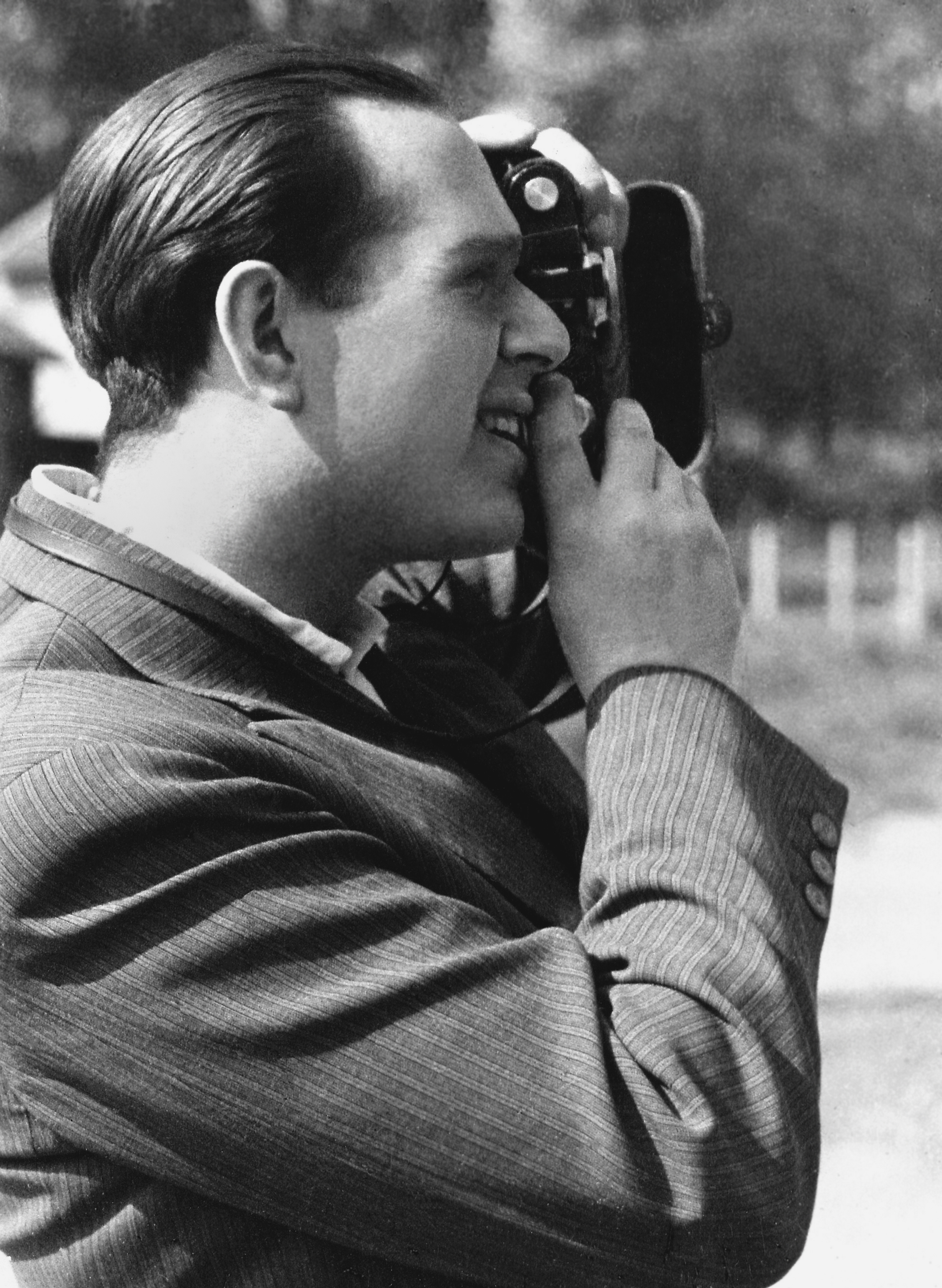
Alfred “Fred” Stein was born on July 3, 1909, in Dresden, the son of a rabbi. His father died when Stein was six years old. His mother fostered his cultural interests. Very politically engaged, he became a member of the Socialist Labour Youth when he was 16. He studied law in Heidelberg, Munich and Berlin. In 1930, he passed his first state law examination at the University of Leipzig. On June 30, 1933, he was dismissed from judicial service on antisemitic grounds and was no longer admitted to the second state examination. In August 1933, he married Liselotte “Lilo” Salzburg (1910–1997). Their mutual wedding gift was a Leica I. At the beginning of October, they fled Germany and he opened Studio Stein in Paris in 1934. He worked as a portrait and press photographer for the German press in exile, and for French magazines and newspapers, as well as the communist and Jewish press. Lilo supported him in all his business and technical tasks. The couple were part of the Parisian network of emigrated authors, artists and intellectuals. At times, Gerda Taro was their lodger; and Robert Capa used Stein’s darkroom. Daughter Ruth was born in 1938.
With the start of World War II, Stein had to register as an “enemy alien” with the French authorities on September 5, 1939, and was imprisoned for ten months in internment and labour camps. After escaping from the camp, he met up with his family again in Toulouse in 1940. Lilo had managed to save a suitcase full of negatives and prints from Paris. They emigrated to the USA on May 6, 1941, arriving in New York City on June 13. For four years, Stein was a member of the Photo League photographers association. Son Peter was born in 1943. Stein’s work was published in different newspapers and magazines; and, in 1946, he had his first exhibition at the Tribune for Free German Literature and Art in New York. In 1947, Pantheon Books, New York, published his photo book, “5th Avenue”. In 1952, he was granted American citizenship; and in 1957, he joined the American Society of Magazine Photographers. In 1958, he made his first trip back to Germany and started a collaboration with the German Press Agency (dpa). On September 27, 1967, Fred Stein died in New York after a short illness. His archive is maintained by his son, Peter Stein. -
Monday to Sunday from 10 AM to 6 PM